
Contact Info
- +919582355558
- gauravgwc45@gmail.com
- 1699, Lower Ground Floor, Sector 52, Near Ardee City Gate Number 2 Roadm, Gurugram
Laparoscopic Surgeon
Abdominal pain, digestive symptoms, and certain surgical conditions may require more than medication or observation. When an operation becomes necessary, the surgical approach is an important part of treatment planning. Laparoscopic surgery offers a way to perform selected operations through small incisions, using a camera and specialised instruments to view and treat internal structures.
The method is used for several abdominal conditions, but the decision to operate depends on the underlying diagnosis rather than symptoms alone. Understanding the stages of assessment, surgery, and recovery helps explain why different patients may receive different recommendations.
Identifying the cause of abdominal symptoms
Abdominal pain can originate from the digestive tract, gallbladder, appendix, urinary system, reproductive organs, abdominal wall, or other structures. Its location, duration, severity, and associated symptoms help guide investigation.
For example, pain in the upper right abdomen may occur with gallbladder disease, while pain that becomes more pronounced in the lower right abdomen can occur with appendicitis. Neither pattern confirms a diagnosis by itself. Indigestion, infection, inflammation, kidney stones, and other conditions can produce overlapping symptoms.
Assessment may include a medical history, physical examination, blood tests, urine testing, and imaging. Ultrasound is useful for some conditions, while computed tomography may be appropriate in other situations. The choice depends on the suspected cause and the patient's clinical condition.
Sudden severe abdominal pain, fainting, a rigid abdomen, persistent vomiting, or abdominal pain accompanied by confusion or signs of shock requires urgent medical evaluation.
When an operation may be considered
Surgery is not necessary for every abdominal complaint. Some conditions improve with medication, dietary adjustments, observation, or other non-surgical management. An operation may be considered when a confirmed condition is unlikely to resolve adequately without it, creates a significant risk of complications, or requires removal or repair of affected tissue.
Examples include selected cases of appendicitis, symptomatic gallstones, and certain abdominal wall hernias. The timing and type of treatment vary. Some conditions require urgent intervention, whereas others allow time for further testing and planned treatment.
The decision should account for the expected benefits of surgery, available alternatives, possible complications, and the consequences of delaying treatment.
What happens during laparoscopic surgery?
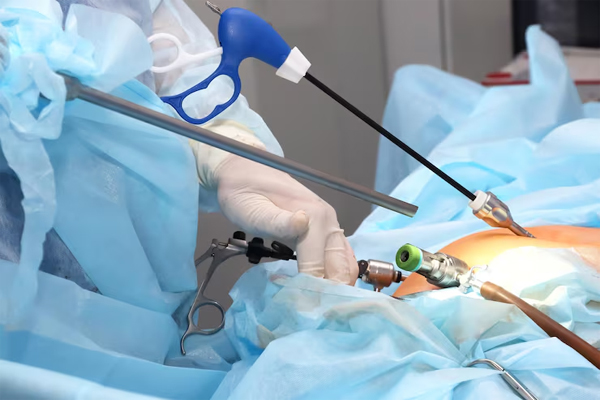
The patient usually receives anaesthesia appropriate to the planned operation. For many abdominal procedures, general anaesthesia is used. Small incisions are made in the abdominal wall, allowing a camera and instruments to enter the operative area.
Carbon dioxide gas is often introduced to create working space. Images from the camera are displayed on a monitor, enabling the surgical team to identify anatomical structures and carry out the procedure.
The steps vary according to the condition. An appendix may be removed, a hernia defect repaired, or a diseased gallbladder taken out. At the end, instruments are removed, the gas is released, and the incisions are closed.
The duration of surgery depends on its complexity. Previous abdominal operations, inflammation, scar tissue, and unexpected anatomical findings can make a procedure more challenging.
Understanding the choice of surgical approach
A laparoscopic approach may reduce incision size and can lead to less postoperative discomfort, shorter hospital stays, or an earlier return to everyday activities after certain operations. These potential benefits should be considered alongside its limitations.
Laparoscopy may be unsuitable when the patient's condition makes the approach difficult or unsafe. Extensive adhesions, severe inflammation, certain anatomical problems, or instability may influence the decision. Open surgery can provide better access in some situations.
A planned laparoscopic operation may also need conversion to an open procedure if the surgeon encounters significant bleeding, poor visibility, or another safety concern. Conversion is a clinical decision intended to manage the situation appropriately, not necessarily evidence that the operation has failed.
Preparing for surgery
Preparation begins with reviewing medical conditions, allergies, previous operations, and current medication. The surgical and anaesthesia teams may request blood tests, imaging, or other investigations based on the planned procedure.
Patients should disclose the use of blood thinners, diabetes medication, herbal products, and supplements. Fasting instructions and medication adjustments should be followed exactly as advised. It is important not to independently discontinue prescribed medicines.
Arrangements for transport home and assistance during the initial recovery period may be necessary. Patients should also understand the expected hospital stay, wound care requirements, activity restrictions, and symptoms that warrant medical attention.
Recovery and warning signs
Recovery varies considerably. Some procedures allow discharge on the same day, while others require observation or a longer hospital stay. Temporary fatigue, incision soreness, bloating, and shoulder discomfort may occur after abdominal laparoscopy.
Gentle walking, appropriate hydration, balanced meals, and gradual activity can support recovery when consistent with discharge instructions. Driving, lifting heavy objects, and returning to strenuous work should wait until the relevant clinical guidance permits these activities.
Fever, worsening pain, repeated vomiting, spreading redness around a wound, or difficulty passing urine requires prompt assessment. Sudden breathlessness, chest pain, or collapse requires emergency care.
For people researching Laparoscopic Surgeon in Gurgaon, the important medical question is not the location phrase itself but whether the proposed surgical method is suitable for the confirmed condition. The benefits, alternatives, and individual risks should be understood before an operation proceeds.
Frequently asked questions
1. Can all abdominal operations be performed laparoscopically?
No. Some operations are better performed through open surgery, depending on the condition, anatomy, previous surgery, and safety considerations.
2. Is hospital discharge always possible on the same day?
No. Discharge depends on the procedure, recovery from anaesthesia, pain control, ability to eat or move when appropriate, and the presence of complications.
3. Does small-incision surgery mean there are no scars?
No. Laparoscopic incisions generally leave scars, although they are often smaller than those associated with open surgery. Their appearance varies between individuals.
- Laparoscopic Surgeon in Gurgaon Sector 52
- Laparoscopic Surgeon in Gurgaon Sector 51
- Laparoscopic Surgeon in Gurgaon Sector 53
- Laparoscopic Surgeon in Gurgaon Sector 54
- Laparoscopic Surgeon in Gurgaon Sector 55
- Laparoscopic Surgeon in Gurgaon Sector 56
- Laparoscopic Surgeon in Gurgaon Sector 57
- Laparoscopic Surgeon in Gurgaon Sector 42
- Laparoscopic Surgeon in Ardee City
- Laparoscopic Surgeon in Sushant Lok
- Laparoscopic Surgeon in South City
- Laparoscopic Surgeon in DLF Phase 5
| Tags: |